
The Keystone Habit
This might have been the most important thing I did to achieve financial stability

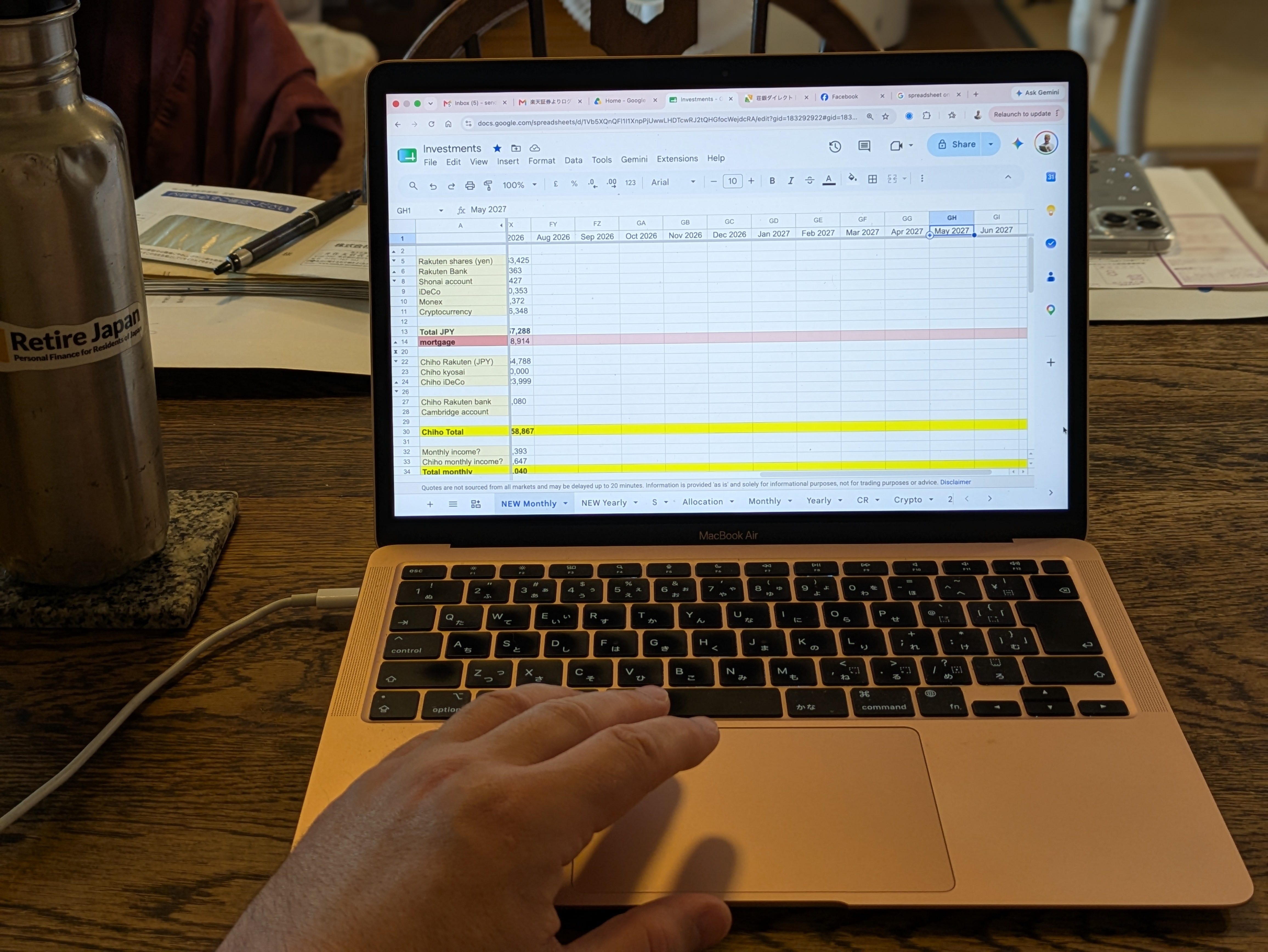
Every month on the first of the month I update my spreadsheet.
I’ve been doing this since June 2012. Month in, month out.
170 times so far.
At first it was pretty simple. Just a bank account. One bank account. Going up by a few thousand yen a month.
Over time we have added more bank accounts, broker accounts, a mortgage (home loan), NISA and iDeCo accounts, the 小中企業共済 savings scheme, and even a small Bitcoin allocation. But the process is the same.
Updating the spreadsheet each month is simple. I open up the spreadsheet (it is a Google Sheet). I open up each of our accounts one by one and copy the numbers across.
That’s it.
Takes less than ten minutes, mainly because of all the 2FA security on the accounts.
And yet I think this simple habit is one of the main reasons I was able to retire early in 2022 at age 44.
The power of checking in
Updating the spreadsheet doesn’t do anything.
But it is a reminder of what we need to do. It shows us where we are now, and where we were last year, ten years ago, or even back in 2012.
It even reminds me of where we were in 2008, when I had just lost my job and we didn’t have any savings or investments.
Updating the spreadsheet is the keystone habit.
Keystones
A keystone is an architectural feature. It is the stone at the top of an arch that locks all the other ones in place and allows the arch to bear weight.
Without the keystone, the arch would collapse.
There are many keystone habits. Weighing yourself or looking in the mirror might be a health keystone habit. A weekly meeting might be a work keystone habit. Date night might be a relationship keystone habit.
For me, the spreadsheet provides information, guidance, and motivation. The simple act of filling it in each month reminds me to do the things necessary to keep moving forward, keeps me excited about what we are doing, and lets me know that we are on track to reach our goals.
How to set up your spreadsheet
I recommend having a line for each major account. Include savings accounts, broker accounts, and similar net worth type information.
I don’t have a line for the value of our manshon, as we are not planning to sell it. Nor do I have a line for our current accounts that we use to pay the bills, because those fluctuate too much.
Decide when you are going to update it.
There is no need to do this very frequently. I certainly don’t recommend doing it every day! Once a month like I do is fine, but not necessary. Once a year is probably okay. Or somewhere in between.
Pick a day you will remember to do it (put it in your calendar) and update your spreadsheet regularly.
After a few months you’ll start to see progress. After a few years you’ll start to see trends.
Other spreadsheets
I also have a future projections spreadsheet. This is not necessary, but can be interesting and help with planning. More on that in a future post.
If you have debt keeping a debt elimination spreadsheet might be motivating and help you eliminate your debt faster.
If you are saving for specific goals (education, buying a car, holiday, house deposit, etc.) it might be fun and motivating to have a spreadsheet for those too.
How about you? Do you have any keystone habits, financial or otherwise?
If you enjoyed today’s post and want to contribute to our costs, you could buy me a coffee (more like some web hosting, amirite?) or become a paid subscriber on Substack. All donations much appreciated.
The Monday Read, going out to around 3,000 subscribers each week. Please share this post/email with friends/colleagues who may be interested in it.
Check out the RetireJapan website for more information, the Forum for discussions about personal finance and investing in Japan, and our coaching page if you need more help.
I’ve been using Moneytree in a similar way, still has free connectivity to most banks and I then add in my investments every month
I started doing this a couple years ago and fully agree on the powerful benefits of this simple habit. Another way to frame the "information, guidance, and motivation" for people like me who are given to worrying about their finances, is as reassurance: things are on track and moving in the right direction. Or, if they've been temporarily disturbed, it's a minor blip that can be corrected with time. Seeing one's efforts as a vector pointing in a positive direction over time helps to dispel anxiety about one's financial future. The present is brighter than the past, and the future brighter still.
Who taught me the habit? You did.